Student Life
International Exchanges Programme

INDO BAVARIAN EXCHANGE- 2018

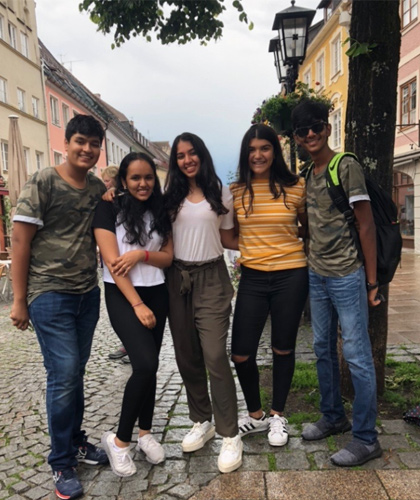
With to-do lists characterized with ‘Try local Bavarian sausages!’ and suitcases bursting with props for our upcoming cultural performance, 20 of us embarked on our trip to Munich, Bavaria on 6th June 2018. The plane ride was filled with uncontrollable chatter, as we discussed images of towering castles and vast gardens that seemed to encapsulate the Bavarian landscape on Google. These images however, did no justice to the beauty of the Bavarian landscape as our breath was taken away upon seeing the miles and miles of greenery in the region. It was certainly a refreshing change from our concrete jungle!
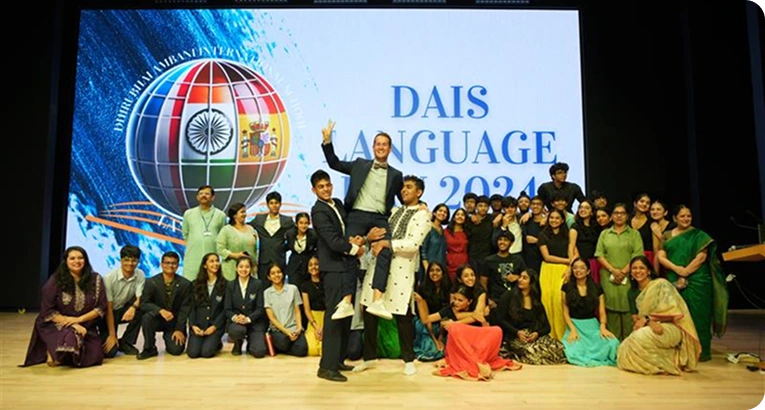
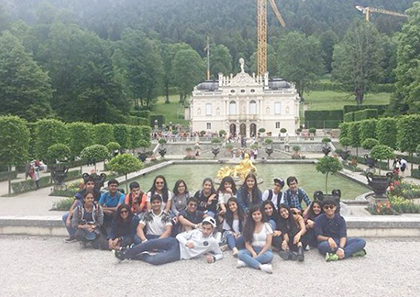
During the first two days, we visited the Bavarian International School. Our time at the school not only consisted of learning that extended beyond textbooks but also forming bonds that we will cherish for a lifetime. We went on long, meandering treks around the school gardens and beautiful fountains with our gracious hosts. Needless to say, that when we realized the school was also home to a majestic schloss (castle) where classes were held, we were ready to stay here forever. We were honoured to put up a cultural performance for the BIS students. It was a moment of great pride, as we stood there, breathless from dancing to Badtameez Dil in our colourful ghagras and kurtas, attempting to encapsulate the rich diversity and heritage of India.
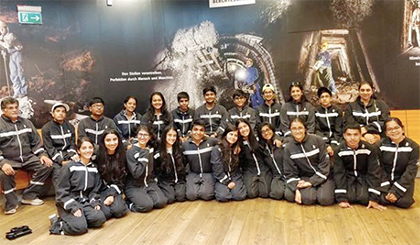
On our trip to Berchtesgaden, we visited Hitler’s Eagle’s Nest and a salt mine. The alpine climate of Eagle’s Nest set the perfect backdrop for a short hike up the mountain. The ‘summit of power’ itself, was not what we had expected it to be. The miniature cottage consisted of a small fireplace, supposedly gifted from Mussolini to Hitler, which left us bewildered as we stared at the symbol of fascist power. The Berchtesgaden salt mine, had perhaps never heard shrieks of joy as loud as ours, as we flew down 25 metre long slides in the biting cold, clutching onto our best friends for dear life. A mind-blowing lights display and the piquant taste of the salt was the perfect end to our Berchtesgaden trip.
No trip to Germany is ever complete without a trip to a neighbouring country. We visited Salzburg, Austria—Mozart’s birthplace and the first city to host a public introduction of the Theory of Relativity. Despite the incessant rain pelting down upon us, we explored every nook of the city from cathedrals to the Hohensalzburg Fortress, often chancing upon places where the popular movie ‘The Sound of Music’ was filmed. We also visited the quaint Nuremberg City, which hosted the historic Nuremberg Trials. The Nuremberg museum helped us envision events we had only read about in history textbooks, helping us understand the scenario post WWII and reflect on the atrocities committed on the innocent and vulnerable. This gut feeling of sheer horror further intensified during our visit to the infamous Dachau Concentration camp, where we comprehended the true extent of the brutality of WWII. It was an incredibly enlightening moment, as we realized the cataclysmic nature of war and the consequences of human greed and indifference.
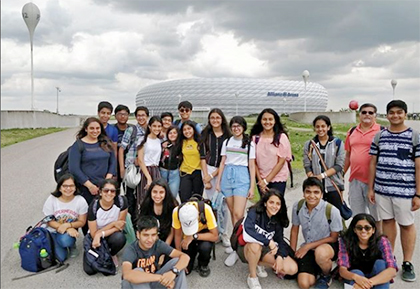
The Neuschwanstein Castle, popularly referred to as the Disney Castle, left us spellbound. The beauty and splendour of the castle, built by the eccentric King Ludwig the II, left us breathless, as did the Nymphenburg Palace. Football fans in the group revelled visiting the Allianz Areana, a 75,000 seating capacity stadium, well-known for its exterior of inflated ETFE plastic panels. Learning about the rich history of these palaces, helped us understand the social strata of historic times. On our final day in Bavaria, we were given the challenging yet rewarding responsibility of planning out the day ourselves. After a lot of deliberation we decided to go to a trampoline park and shopping. Some students planned out the logistics of the day completely, from coordinating with receptionists at the trampoline park who only communicated in German, to mapping out routes on the Ubahns and Autobahns. As such, we imbibed essential qualities of independence, responsibility and cooperation.
With heavy hearts we returned to Mumbai, despondent to leave behind the cheesy pretzels and Weisswursts, to leave behind the greenery and castles, to see these historic monuments for the last time. Yet, we returned energized and happy, with the rich history and scenic beauty of the Bavarian region etched in our minds and hearts, forever.
Photo Gallery
Grade 8 & 9 Service trip to India 18th February – 28th February 2018
‘Empowering Rural India’ is a project that supports impoverished villages through the three pillars of Infrastructure, Education and Empowerment. BIS has been involved in this project for the last 6 years and it is a highlight of our Service year.
And so it was that on Sunday 18th February a swarm of 16 stalwart students (biggest group ever !!), together with myself, Mr Escat and Mr Heinl boarded a flight to Mumbai for our 10day adventure. As ever the pace was fast, furious, fascinating and fun.
Our cultural travels included a visit to the Elephanta Island caves, various temples, the Dhobi ghats (a huge outdoor ‘laundry service’), the Mahatma Gandhi museum and a Bollywood tour. This year the traffic in Mumbai seemed worse than usual and we spent far too many hours imprisoned in our bus …. aching to reach our final destinations !!
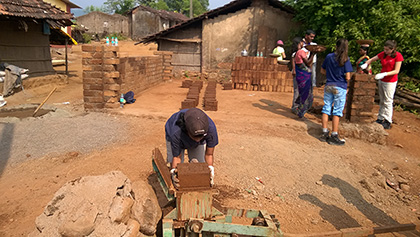
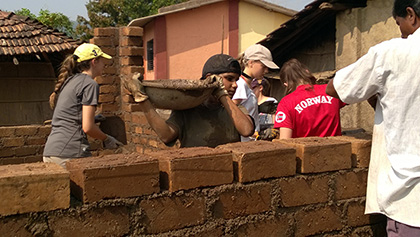
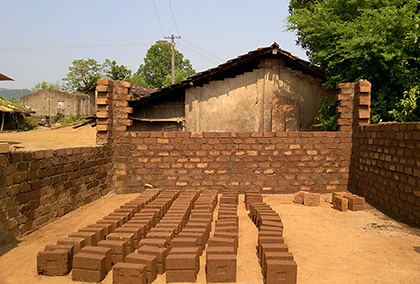
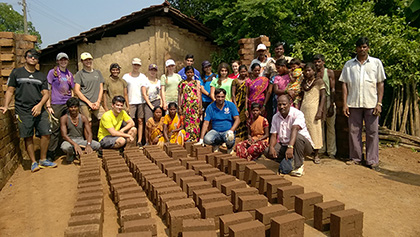
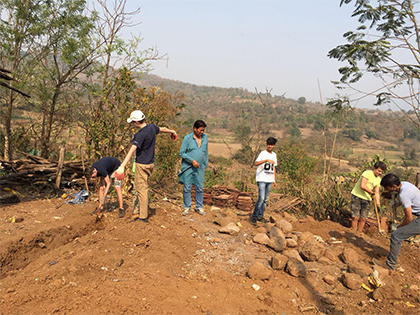
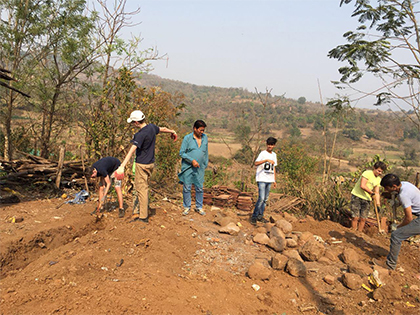
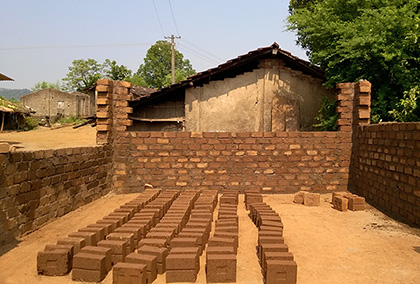
The village service project at Kumbhaghar is in a stunning location - in the middle of nowhere about 100 kms from Mumbai with rolling countryside and a sparse population – a real juxtaposition to the crazy traffic and heaving crowds of Mumbai. We made bricks, built house walls and dug and fixed foundations. We worked in ‘chain-gangs’ in the heat of the Indian sun - 38˚C - moving stones to fill in foundations or passing the concrete to build the walls. We probably drank enough water to fill a swimming pool - just to keep hydrated. The students were committed and hardworking – often working above and beyond what was required…. especially in the brick making competition! They did a brilliant job and we achieved a huge amount in the relatively short time we were there.
We also visited the world heritage site of Matheran – which is close to another of the villages supported by Empowering Rural India. Although this village project has now been designated as finished, we wanted our students to see a ‘finished product’ and it is also one which BIS students worked on for several years.
Tired but fulfilled, we returned to Mumbai. Our sojourn in India was slightly extended when our night flight to Munich was cancelled! A sleep in a 5* hotel, a lovely lunch and 15 hours later, we did eventually board a flight home. The transition from +38˚C to - 12˚C was nonetheless a bit of a shock to the system…
It is always a privilege to work on this project and this year was no exception. Our students were great representatives of our school. Exposure to this sort of service activity in a challenging environment well outside their comfort zone has lent them new perspectives on culture, internationalism and need and I hope they will carry this forward with them.
Photo Gallery
Indo German Exchange Report
The Indo-German exchange students visited Kumbhargarh village from 28 to 30 October. Our team consisted of 7 German girls, 2 DAIS boys and myself, along with 3 teachers. The main tasks for this trip were brick making, brick laying, painting and dancing. Over these days, we did a lot more work than I expected, but at the same time I feel we could have worked a little better.
On the first evening we did a recee trip of the village, showing our guests the work done by DAIS students previously, and acquainted them with the villagers and the stuff they would be working on. I also noticed that the Czech exchange team that had come the previous week really did a lot of work and thus set a target for what we had to get done. We also debriefed them about the village itself – the economy, people’s jobs, and education. We ended the evening with an interaction with the villagers about what they felt were the main issues they faced and how we could help. This was my first proper interaction with them despite having visited twice before and I learnt a lot about their life and things I did not have any clue of earlier. For eg, one couldn’t be elected head of the village if one had more than 2 children, which disqualified 2 potential candidates immediately.
The next day we had a late start, and therefore reached the village much later than planned and it had already begun to get hot. We began with painting and brick making. Initially, I supervised and helped out with the painting the pipes in the school building in red. There were two girls with me, but we worked really slowly because the heat was intense. The brick making team took a while to get a rhythym to the work. Brick making involves weighing the mixture of soil and water to get it between 11 and 12kg and emptying it into the space in the machine. Then a level has to be pulled down which compresses the mixture and then the brick is levered out of the rectangular space and kept to dry. We initially had a tough time with this, figuring out the exact quantity of mixture to be out, else that lever was impossible to pull down and sometimes it took 4 of us to pull it down. Eventually though we got it right. At the end of the morning, we were done with only 54 bricks and 3 partially painted pipes. Things were not going as planned and it was really frustrating. However, no one could be blamed, the girls were just 13, and the hot, humid weather conditions were unlike anything they’d ever experienced.
That evening we went to Imagica. It was my first visit there and it was much better than I had imagined. We did some serious adrenaline pumping rides two and four times and by the end of it were completely exhausted. Following dinner at the lodge, we had a reflection session. The session culminated in allocation of their bake sale funds for resources for the villagers. They had raised roughly 28000 rupees and translated that into soap, soya beans, chickens and shoes for the families in Kumbhargarh.
The next day, work was much more efficient. We focused only on brick building and brick laying. Together we built 120 bricks and two walls, and we weren’t even tired, it just became lunch time and we ran out of bricks to do the walls. It was just as hot and sweaty but we were really motivated and worked tirelessly throughout. It was a much better day than previously, and even the teachers lent a hand to quicken the pace. At the end, we distributed fruits, chocolates and crisps to all the villagers and workers who were really thrilled.
This was a very different trip, I also had to get rid of several creepy-crawlies which made the girls shriek every now and then, but I got to know so much about German life and culture, of which I previously knew not very much about. I think it was a great experience, and I learnt that no matter what the target, one has to consider the capabilities of the workforce too, and cannot force someone way beyond their limits. It made me better understand what it means to be a leader and I’m going to work on improving myself too.
Photo Gallery