
IGCSE Programme
The International General Certificate of Secondary Education (IGCSE) Programme - an evolving, globally relevant educational opportunity. The IGCSE Programme is administered by the University Of Cambridge Assessment International Education (CIE). The IGCSE Programme is recognized world-wide; with over 10,000 schools in 160 countries offering the Cambridge qualifications. The IGCSE has always emphasized adding value within a national context whilst also contributing to internationalism. The focus is on safeguarding distinctive cultural identity through specific language and literature syllabi, whilst also encouraging an international outlook. Thus, the importance of an appropriate mix of global and local contexts is well recognized as an essential dimension of IGCSE.
IGCSE Key Features of the Programme

Provides an ideal foundation for higher-level courses such as the International Baccalaureate Diploma Programme, 'A' Levels and the North American APT (Advanced Placement Test);

Has worldwide recognition and is equivalent to the Certificate of Secondary Education from Indian education boards, General Certificate of Secondary Education, and 'O' Level;

Ensures a broad-based education, while encouraging a degree of choice.

Offers syllabi which reflect local societies within a global context, hence ensuring that students gain a wide perspective while recognizing and valuing their own environment.

Develops key learning, problem-solving and investigative skills by encouraging an active, critical and questioning approach to study.
The IGCSE Curriculum in DAIS
The IGCSE (International General Certificate of Secondary Education) Programme at DAIS, one of the leading IGCSE schools in Mumbai, follows the Cambridge curriculum provided by CIE (Cambridge Assessment International Education).

In the two-year IGCSE programme, students of Classes IX and X study a range of subjects that broaden their understanding and deepen their learning through varied methodologies. Students are encouraged to collaborate and use appropriate technology to enrich their learning and enhance their understanding of local, national, and global issues. Experiences within and outside the classroom make students problem solvers and mindful learners. An integral aim of the DAIS experience is to develop self-aware, sensitive learners with a strong sense of community. Students transition seamlessly into the IB Diploma or other pre- university programs.
Class 8, is a foundation year that focuses on building the skills and attributes integral towards preparing for the formal years (Class 9 and 10) of the IGCSE Programme. Students study academic subjects that prepare them for the IGCSE programme, ranging from First Language English, Second Languages like Hindi, French and Spanish , Sciences, Humanities and Mathematics, along with optional subjects like Drama, Art and Computer Studies.It is complemented by Lower Secondary Global Perspectives to develop the skills of research, analysis, evaluation, reflection, collaboration and communication. Students will be required to study Marathi as a compulsory Third Language.
The following are the subject Choices for Classes IX and X.
Group 1
Languages (Compulsory)
- First Language English
- A Foreign Language (French or Spanish) or a Second Language (Hindi)
Group 2
Humanities & Social Science (Compulsory)
- World Literature Global Perspectives
- History
- Geography
- Global Perspective
Group 3
Sciences (Any two/all three)
- Physics
- Chemistry
- Biology
Group 4
Mathematics
- Extended Mathematics (compulsory)
- Additional Mathematics
Group 5
Creative Technical & Vocational
- Art & Design
- Business Studies
- Computer Science
- Drama
- Music
- Physical Education
Students study a maximum of 10 subjects. The compulsory subjects are First Language English, World Literature, Extended Mathematics, along with a Foreign/ Second Language. Students can choose a minimum of 1 and a maximum of 2 from Humanities: History, Global Perspectives, Geography. They can choose a minimum of 2 and a maximum of 3 from Science: Physics, Chemistry and Biology. From Vocational subjects they will choose 1 from what is offered. The 10th optional subject is Additional Mathematics.
IGCSE Learner Attributes
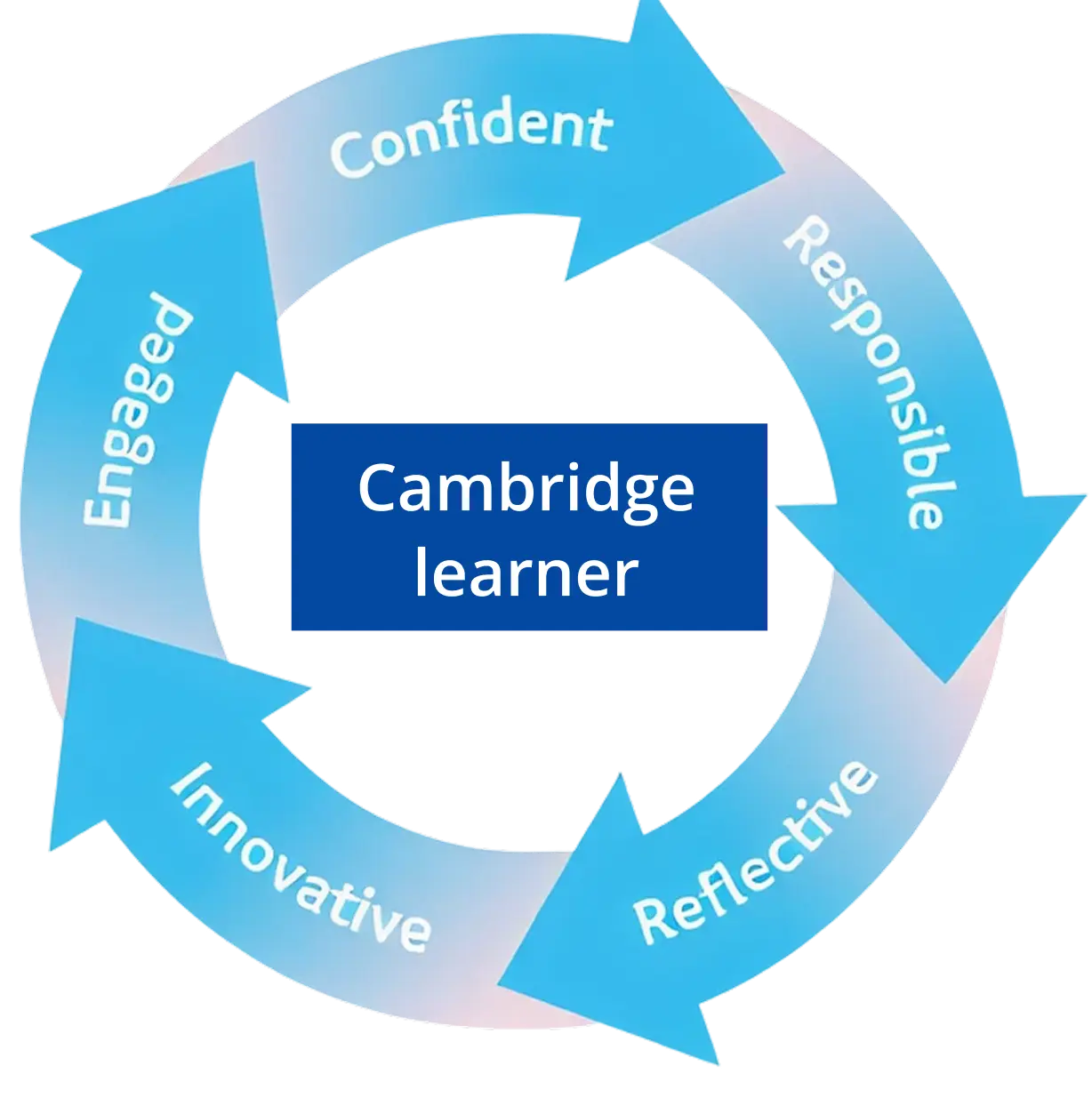
IGCSE Learner Attributes
- Confident in working with information and ideas - their own and those of others
- Innovative and equipped for new and future challenges
- Responsible for themselves, responsive to and respectful of others
- Engaged intellectually and socially, ready to make a difference
- Reflective as learners, developing their ability to learn
The programme focuses on:

Deep knowledge and understanding of subject content
Applying knowledge to real life
Intellectual enquiry
Flexibility and responsiveness to change
Influencing outcomes
Cultural awareness.

The IGCSE Assessment
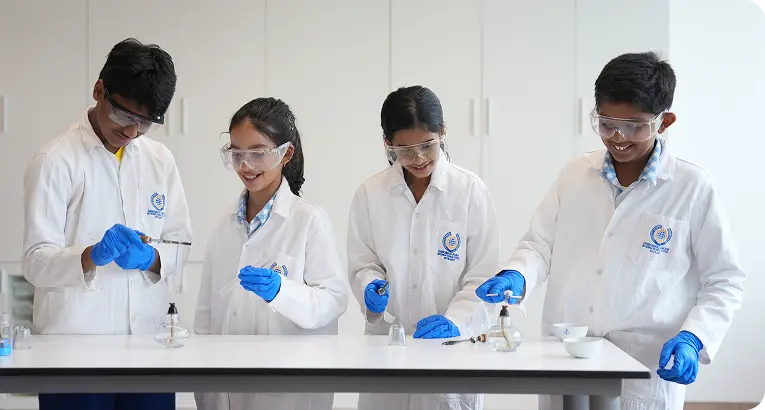
Assessment techniques go beyond just knowledge recall and utilise those appropriate to the various subjects, such as oral and listening tests, experiments, project work, performance, and fieldwork as well as conventional written exams.
Accessibility to candidates of widely differing abilities.
Student's ability to use and apply knowledge appropriately.
Handling information and using it to solve problems.
Acquiring experimental and investigative skills.
What is Criterion referencing?
A student works to reach his or her highest standard, and is awarded a grade based on the quality of work, irrespective of what others may have done. Getting top grades is within the reach of many. Assessment techniques go beyond just knowledge recall and include those appropriate to various subjects, such as oral and listening tests, experiments, project work, performances, fieldwork, as well as conventional written exams.

Developing the whole personality
Through a stimulating classroom environment and high levels of student engagement, the programme empowers students to play an active role in their learning.
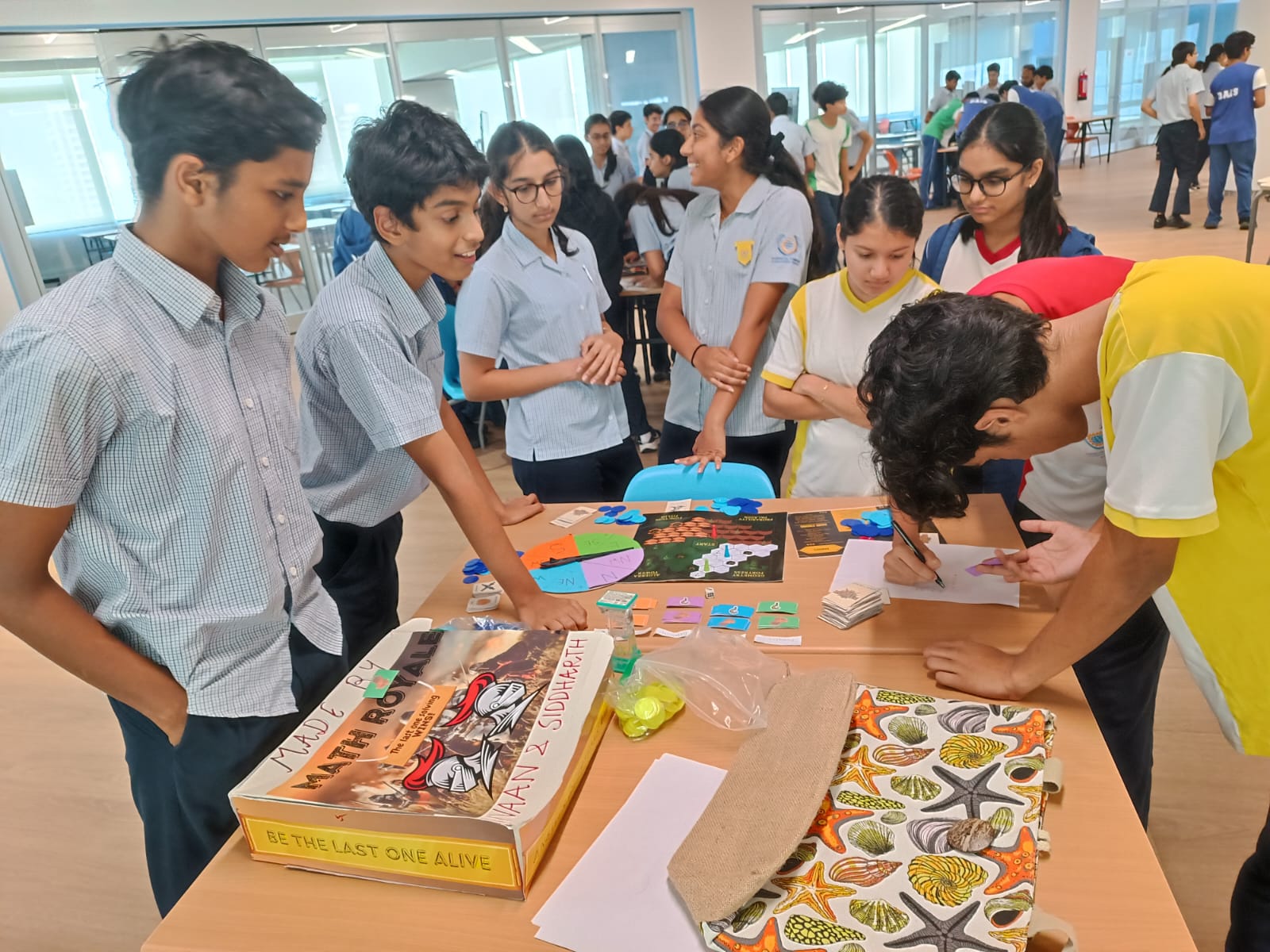
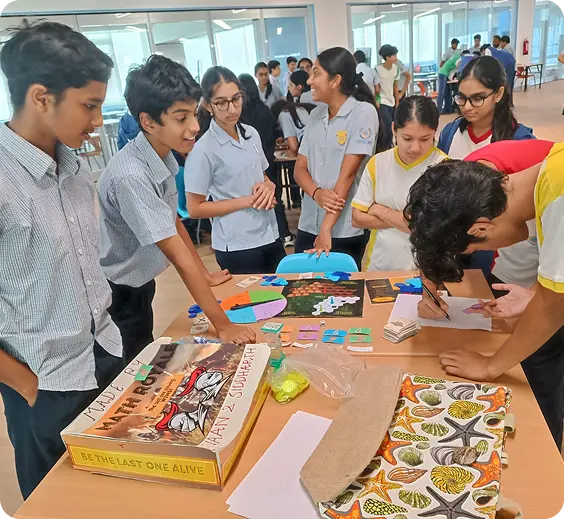
In doing so, the curriculum actively supports discussion-based learning and hands-on activities, and embeds innovative approaches to learning across all subjects. In addition, the co-curricular activities and service initiatives are integral to student life, nurturing self-aware individuals who are responsible towards themselves and the community. DAIS recognizes that education synthesises academic, emotional, social, personal and intellectual aspects of student's personalities through activities in class and outside and recognizes the integral role these play in understanding the social, natural and environmental world the students live in
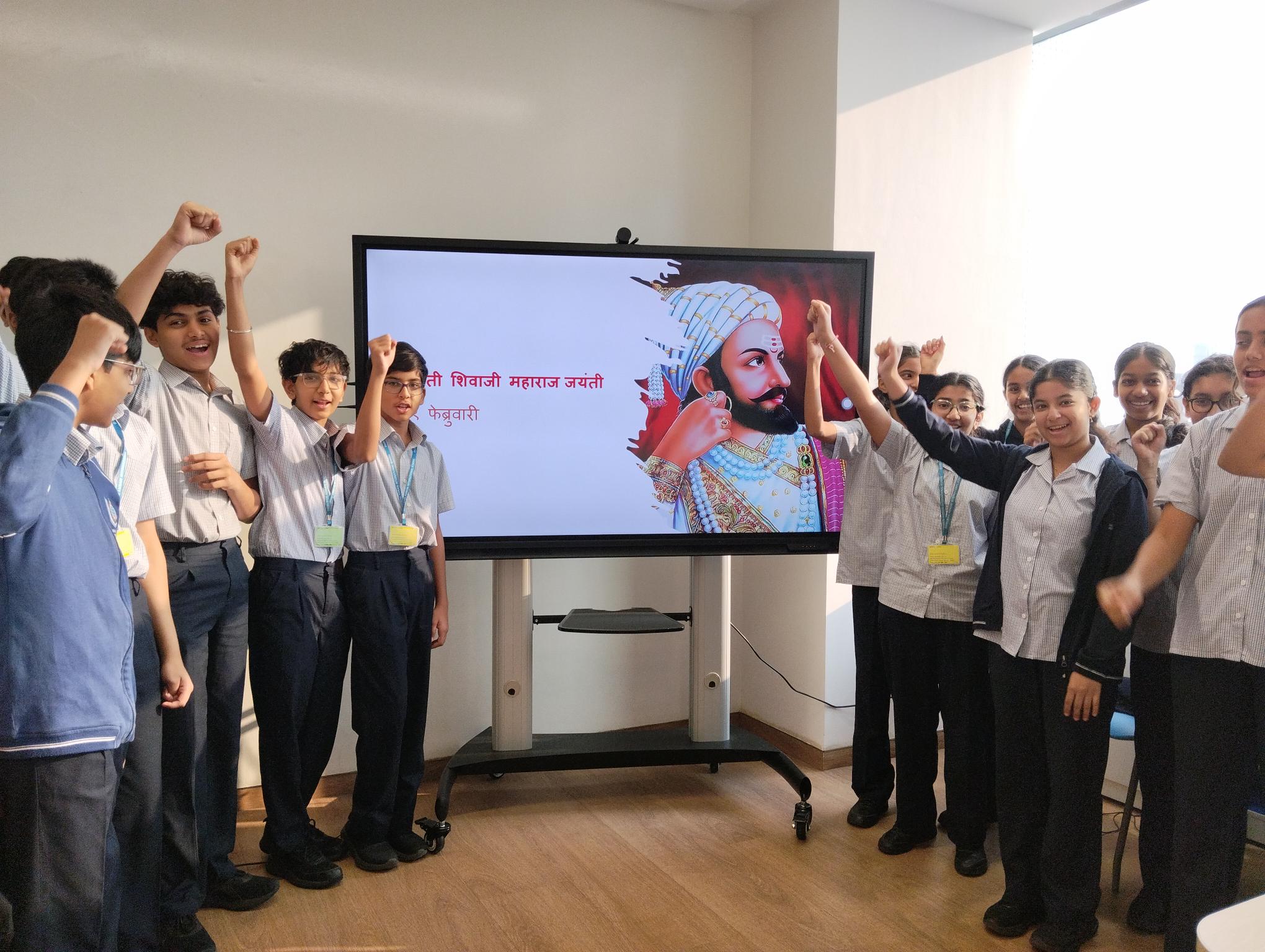
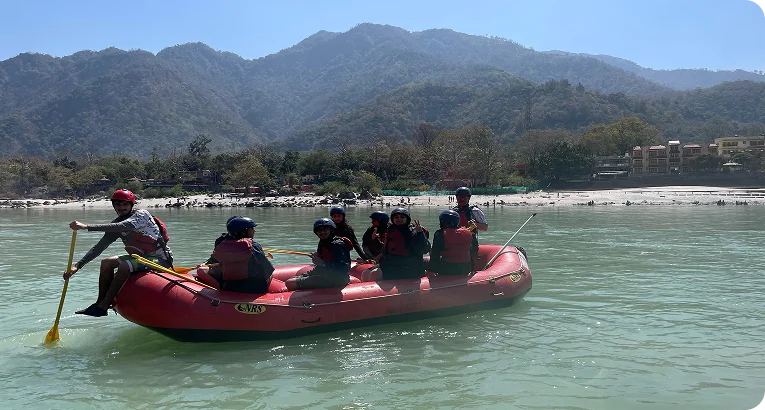
The students engage in experiential learning beyond the classroom through school service activities, overseas exchange programs (like ISTA), subject specific educational trips, Model United Nations (MUN) and Round Square (RS). These encourage students to experience and appreciate other cultural contexts and broaden their world view. A range of activities ensure both physical and intellectual stimulations - ranging from SLA and Ski Camps to the focus on STEM related programmes and activities such as Robotics, Coding Club and Science Fairs. The aim is to build a self-aware individual who later stride the world with empathy, confidence as well as responsibility towards self and the larger community.
Co-Curricular Activites:
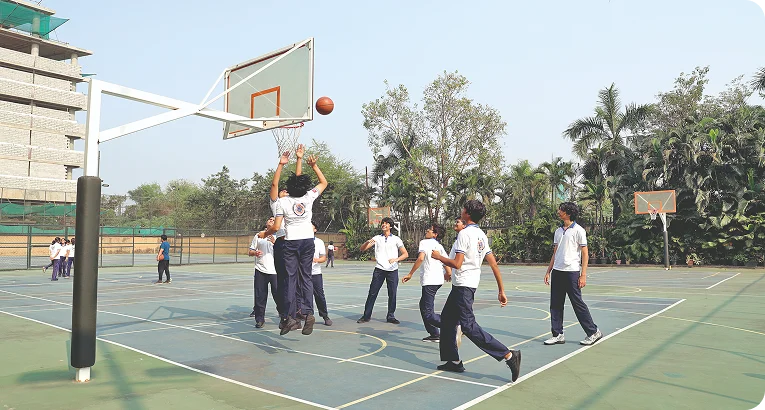
In addition, students must also choose from a range of sporting and non-sporting co-curricular activities. Such experiences help them to develop a well-rounded personality.
Non Sporting Co Curricular : Tuesdays 3-4

1. Art
2. Dance
3. Coding
4. Mathematica Club
5. Debate
6. Insignia
7. Cookery
8. Model United Nations
9. Photography
10. Robotics
11. Music
12. Reading club
Sporting Co Curricular : Fridays 3-4
1. Judo
2. Basketball
3. Football
4. Table Tennis
5. Zumba
6. Chess
7. Taekwondo
Student Care
The student is at the heart of everything we do, and we embrace the individuality of every learner by providing a nurturing and supportive learning environment.
The teacher student ratio supports the individual attention to each learner. The Student Care Department partners in the delivery of the curriculum to meet the learning needs of each student.
Social and emotional learning of students as well as growth of a positive personality is the focus of the PSHE (Physical Social Health Education).
PSHE classes are held on a weekly basis addressing issues of health and wellbeing, relationships and understanding of the wide world. Students have access to Individual counselling services for those who require one on one emotional and social support.
The Student Care Department includes a Learning Support Team with well qualified professionals to guide and maximize the performance of students with special needs. This Team communicates with CIE to facilitate the concessions granted by them in examination conditions to students with special needs thus ensuring a flexible and inclusive approach.
Cambridge Lower Secondary
Checkpoint Class VIII.
These diagnostic tests are held in Term II of Grade 8 and are marked by CIE to provide schools with an external international benchmark for learner performance. Each learner receives a statement of achievement and a feedback report with details of the skill levels in English, Mathematics and Science. This provides valuable feedback on learner's strengths and weaknesses as they start the formal IGCSE Programme in Class 9.
College Counselling
These diagnostic tests are held in Term II of Grade 8 and are marked by CIE to provide schools with an external international benchmark for learner performance. Each learner receives a statement of achievement and a feedback report with details of the skill levels in English, Mathematics and Science. This provides valuable feedback on learner's strengths and weaknesses as they start the formal IGCSE Programme in Class 9.
School Timing
Class VIII to X

Monday, Wednesday & Thursday

8:15 am to 3:00 pm.
Class VIII to X
Tuesday & Friday
8:15 am to 4:00 pm.