Student Life
International Exchanges Programme

Indo-Italian Exchange

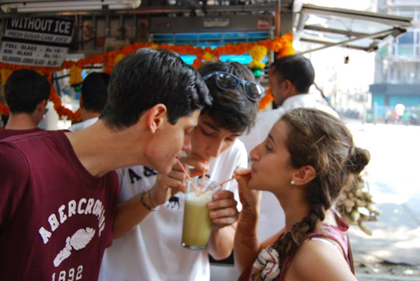
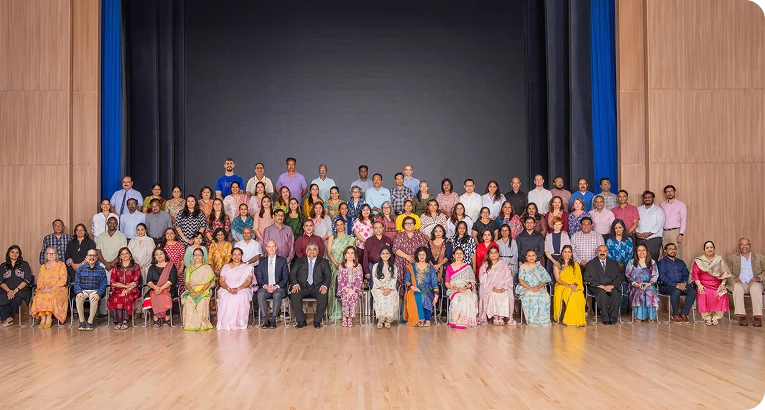
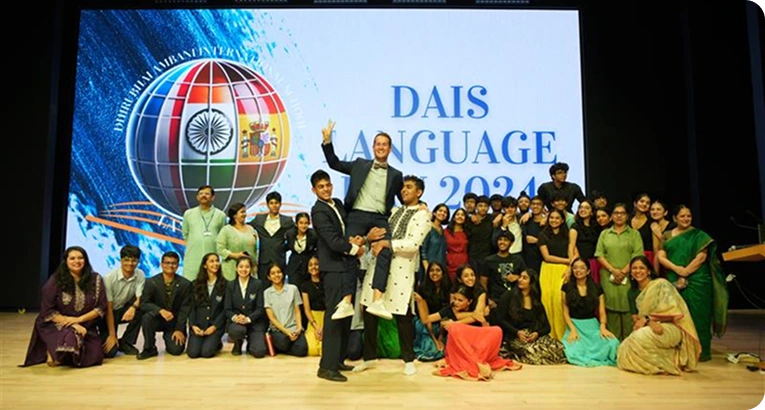
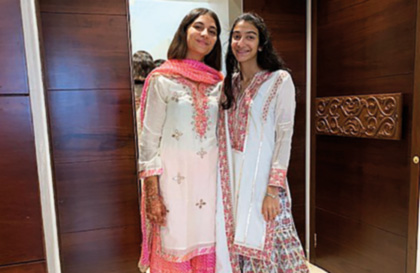
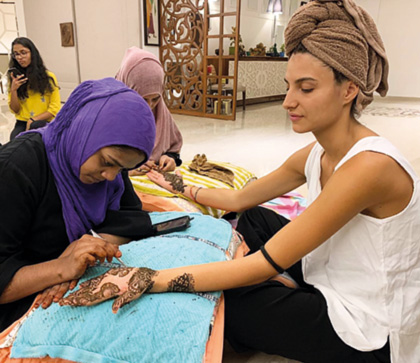
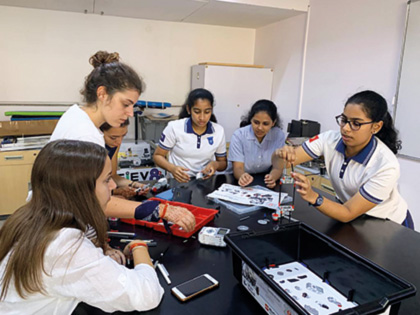
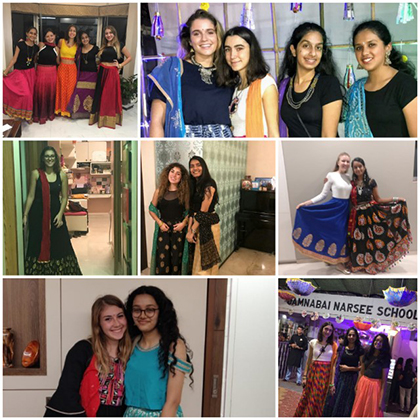
My delegate, Martina woke up to a fascinating Indian world around her. She marvelled at the small temple inside our house; she was intrigued by the array of colourful spices in our kitchen; and she simply loved the crispy ‘dosas’ she tried for breakfast. In fact, she insisted that she would try nothing but traditional Indian food for the duration of her stay. She enjoyed watching us prepare food, even trying her hand at rolling out a ‘chapati’. Although she had to attend DAIMUN for most of the day, we tried to make the most of her stay with my family. Martina loved the Marine Drive promenade for the extensive waterfront and the sparkling view. That night we tried the Punjabi cuisine with another Italian exchange student, where the Italians experienced true Indian spicy food. The next day, our itinerary included shopping. They loved the beautiful chaos of street markets. The last day of DAIMUN, we took almost all of the Italian students to a ‘garba’ night. They enjoyed borrowing our ‘ghagras’ and ‘chaniya-cholis’; Martina especially loved the jangly silver jewellery. At the DAIMUN social, we DAIS students taught Bollywood dance steps to the Italian exchange students. host students, enjoyed showing them dance steps, and the Italian students in turn loved watching us, and picking up the steps. The next few days the exchange students went on tours in and around Mumbai – Elephanta Caves, Karla Caves, and a Mumbai Darshan. Martina returned full of stories about the rich history that these places showcased. Before they went to Kumbargarh village for a service trip, we had time for one last activity – mehendi. They loved having intricate mehendi designs drawn on their hands,. Often, we stayed up late, talking about our shared experiences. In spite of the language barrier and the minor age difference, we had so much to talk about – common music tastes, high school, art, our love for the other’s cuisines, and so much more. When Martina left, she took with her lots of things – a suitcase full of Indian clothes and jewellery, spicy snacks and pickles, mehendi cones, and hopefully memories of both the DAIMUN conference, and Mumbai. She left behind with me a deeper understanding of how diverse the world is and a respect for her culture.
Talking to Anna, the delegate I was hosting, felt refreshing, as she had a unique perspective on many things, and told me about her own country. It was a truly invigorating experience, to see my own culture reflected in the eyes of another. Seeing the admiration the Italian girls had of the colourful skirts they had worn for the dandiya dance night, the excitement in their eyes when they spoke of the new things they had seen - it made me realise just how rich Indian culture can be. An exchange is defined as the act of giving one thing and receiving another in return. We offered them a place to stay for a week in a foreign country, and an opportunity to experience our culture. In return, they showed us our own traditions in an entirely new light, thus teaching us something new about the place we have lived in all our lives. It was with a heavy heart that we had to bid them goodbye, but the memories we all made together can never be lost.
Photo Gallery
Indo-Italian Exchange
This year at DAIMUN, the school and students were delighted to invite a delegation of students from Rome. The arrival of the Italian delegates was eagerly awaited by all the hosting students of DAIS, as well as their families. When they finally arrived, the initial apprehension dissipated within minutes. On the car ride home, small talk quickly developed into the exchange of traditions from our respective lives. In my personal conversation with the delegate I was hosting, we discussed a wide range of topics, including traditional Italian food, the similarities and distinctions between our educational systems, government policy, and our plans for the future. Despite the fact that the delegates arrived quite late at night, the mutual excitement overrode our fatigue, and we spent most of the night awake and talking to each other. It seemed to most of us, that this year’s DAIMUN would indeed be an enlightening and enjoyable experience.
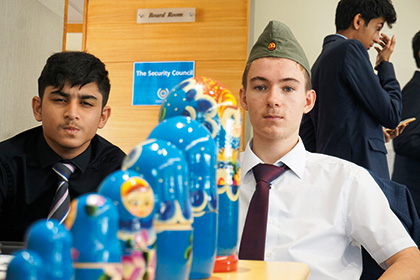
The next afternoon, the delegation arrived at DAIS for the first time. Despite the size of the event, everything was impeccably organized, and there was only some initial confusion among the delegates. This is a credit to the hard work and perseverance of our heads and teachers, who never failed to guide us both before, and during the events. The main event on this day, was the lobbying session for the delegates in their committees. The delegates went over their agendas in great detail and began to formulate their resolutions. The members of the Press Corp started to develop ideas for publication, and we quickly bonded over our shared passion for the work, and our common purpose. For the Italian delegates, this was a particularly educational experience, since they got to see (some for the first time), not only how decisions are made in committee, but also how cultural differences lead to different trains of thought and methods of communicating ideas. They discovered the different nuances of the spoken English language in India, and there were some unexpected difficulties in expressing ideas. However, these barriers were quickly broken down, and the event proceeded very smoothly. The intense debate of a typical MUN then followed and the delegates discussed problems and crises faced by the world today in committees such as HRC, SPECCON, SPECPOL, SOCHUM, DISEC, ICJ and the Security Council. Among the topics of discussion were the North Korean missile crisis, privatization of the world’s oceans, censorship in Asian countries, the sovereignty of Hong Kong, the global energy crisis and the ICJ’s deliberations in Bolivia.
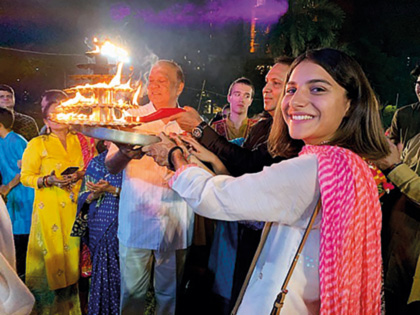
The next day, we took great pleasure in celebrating the festival of Navratri with the Roman delegates. They were very excited to learn all about the traditions and stories associated with this festival, and were surprised to learn that many Indians also fast on this occasion. We thoroughly enjoyed teaching them about our customs, showing them how to wear ‘chaniya-choli’ and how to dance in the traditional Garba style. Navratri is a very important festival to us and we were overjoyed to be able to share it with the delegates. They were fascinated by this festival and I'm sure they'll never forget it. The delegates were also given a tour of the city and shown many well-known places, from the Elephanta caves to the Dhobi Ghaat. At the Elephanta caves, many of the Italian delegates were flummoxed by the troops of wild monkeys running amok, particularly since some had never seen a monkey in real life before. They were also astonished at the intricacies of the stone carvings, and the well-preserved facades, despite thousands of years of exposure to the elements. At Dhobi Ghaat, the delegates experienced a completely different way of life, and were shocked by the poor living conditions that many people in India face on a daily basis. The next week, they were taken to a village near Nagothane where they were given the opportunity to interact with underprivileged children and the local people, and to learn more about rural life in India.
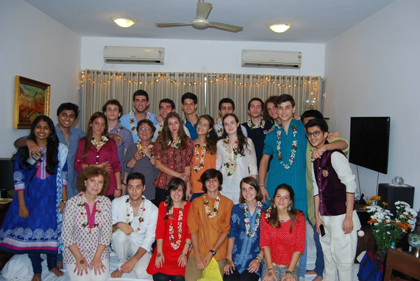
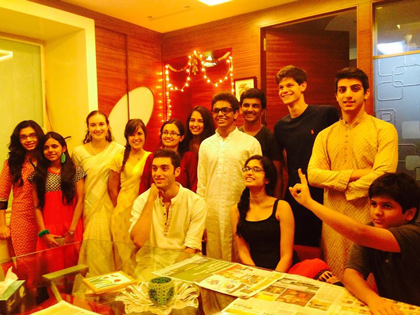
This exchange of cultural norms and practices was extremely valuable to us, and we learnt that in spite of our differences, beauty lay in our diversity. DAIMUN was an experience many of my fellow hosts and I will treasure forever. In our last few conversations with our delegates, they thanked us for the unique experience of our culture and nation, but we felt that we were the ones who should be grateful, given the lessons we learnt in hospitality, kindness and a shared humanity. The bonds created over those few days still remain intact, and many of us keep in communication with the Italian delegates we hosted. We hope the delegates who visited us know that they will always have a home away from home, both in the houses they stayed in thousands of miles from their own country, and in the hearts they touched during their stay here.
Kumbhargarh
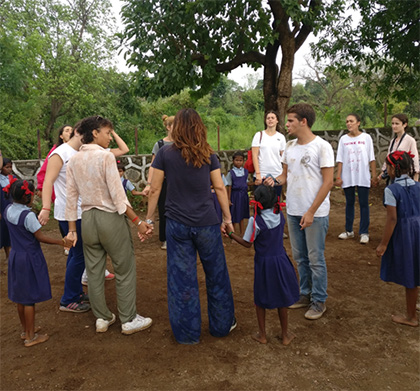
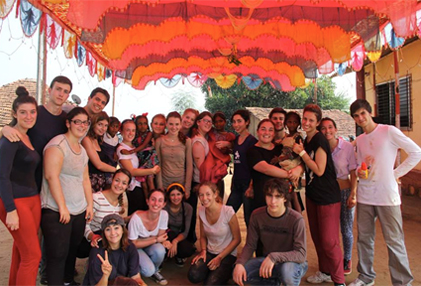
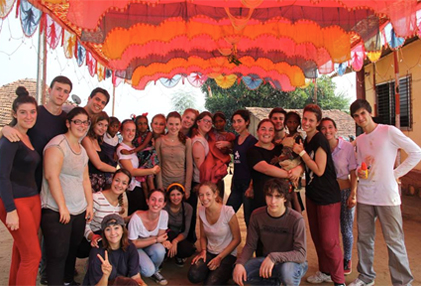
Castiglione! Chorfi! These words bring back a lot of memories from our trip to the tribal village of Kumbhargarh with the Roman students. The purpose of this trip was to understand the social and cultural life of the inhabitants of rural areas and to offer our service to them by aiding them in building houses for the natives. Along with five other students, I left school in the morning by 6:30. We reached the Durshet Forest Lodge by 10:30 where we met the Romans who had reached the previous night. We went to the top of the hill, where the village was located by noon.
We divided ourselves into 4 groups where each group was allotted some work, i.e. making bricks, laying the foundation, transporting gravel and constructing walls. We worked for an hour and then stopped for lunch. Lunch was usually spent talking about football and why football club ‘AS ROMA’ is better than ‘SS LAZIO’ and vice versa. After lunch, we resumed work. On day one, we finished building 2 walls, making 75 bricks and laying the foundation.
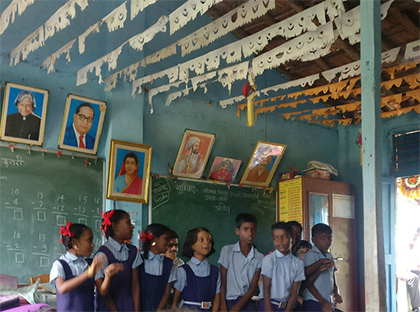
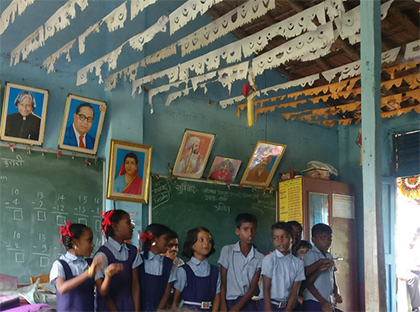
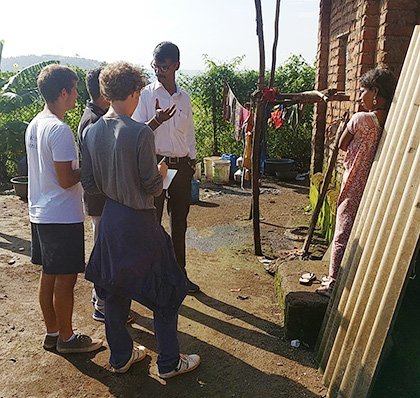
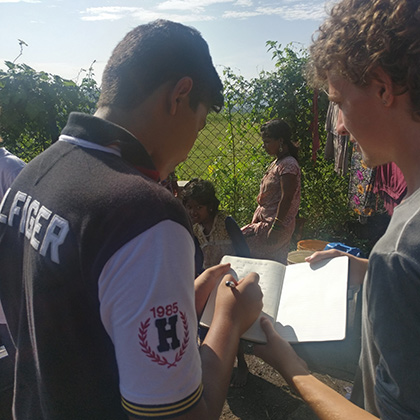
Then, we walked to a nearby primary school where the children performed a few poems for us in both English and Marathi and we interacted with them. We then returned back to the lodge after a day of exhaustive work. The next day we went to the village again and worked in the same groups as they day before for another three hours. After lunch, we left for an amusement park called ‘Imagica’ where we had a blissful experience. On the last day, we went for our last service to the village. A few of us went around the village for a survey while the others continued work. During this survey, we interviewed many natives of varying ages where we came to that they were very grateful to us for all the help and believed that in the coming years a lot more could change in their village owing to the large-scale support that our school gave them. We bid the villagers goodbye and then commenced our journey back. We reached school and everyone’s face had varying expressions: some were ecstatic to be back while some were fearful as DAIMUN was to begin in a few hours.
Photo Gallery
The Indo-Italian Exchange Program 2015
Ciao. Il mio nome e Aashna! Umm… that's basically all the Italian I learnt from my two foreign exchange guests, Francesca and Flaminia. From the 19th to the 25th of November’15, 16 students of DAIS hosted 23 Italian students from Rome. Not only did these guests get to be a part of the prestigious DAIMUN, but they also explored Mumbai through tours, movies and open-air markets.
We picked them up from the airport at 9pm on the 19th November and almost immediately started conversing about our cities, our culture, our difference and similarities. I was initially quite apprehensive that the language barrier would hinder our conversations, however, we were soon joking and sharing with each other.
On their first day, our guests spent an entire day at school. They came with us to classes, learnt a little Hindi and got a thorough tour of our school. After attending house assembly and piquing their interest with our school’s social dynamics, we joked about them being so well-informed that they could even join school the next day. Following a long day at school, the guests got their preview of DAIMUN 2015 with a lobbying session in each of their committees and the first taste of India with their first official Indian meal of rice and roti!
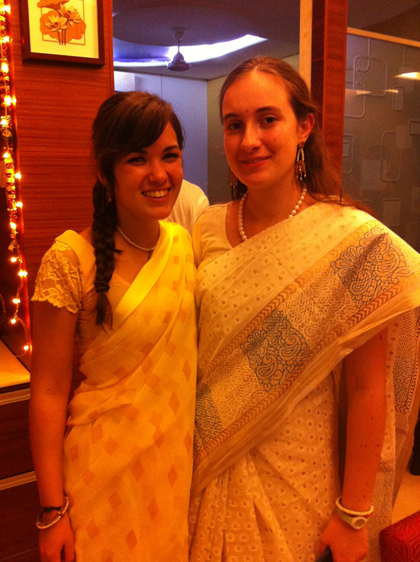
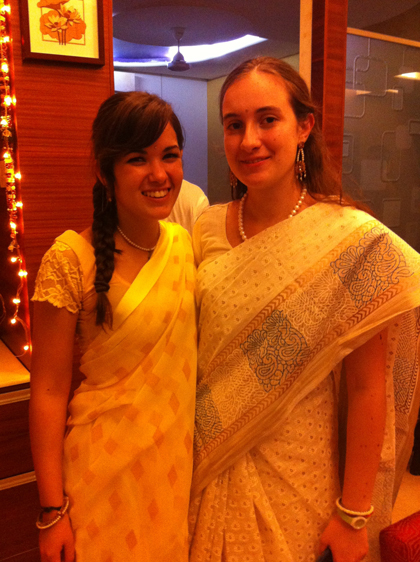
The next three days were filled with more days of MUN debates along with a transfer of culture. A few hosts went with their guests to watch the new James Bond movie in a typical Indian multiplex. I even had the pleasure of cooking Italian food with my guests who had generously brought me pasta, cheese and pasta sauce. I’ll always cherish our mehndi sessions and helping Flaminia wear the sari she had inherited from her grandmother.
For the next two days, the Italian delegation visited famous Indian heritage sites in and around Mumbai and enjoyed a trip to the Elephanta caves as well. We went shopping to Colaba Causeway and ate at Indian Chinese and Italian restaurants too.
On the 28th of November, exactly 10 days after the arrival of the delegation, it was time for goodbye. And although we shared countless memories, we all wished for more time together. I could proudly say that I was able to befriend two of the sweetest, most genuine girls I've ever met and get enriched with a cultural exchange like no other.
They themselves returned home with knowledge about our country from their personal experiences. They learnt a culture completely different from their own and were able to grasp so many aspects of our country in just the 10 days they were here. Many of them spoke of the extent of poverty prevalent on the streets and were bewildered by its dominance. We explained to them consequences of a large population in a relatively small area and spoke about the existence of poverty (in a far less amount) in Italy as well. They learnt the significance of the bindi on a married woman’s head and the importance of taking your shoes off before entering someone’s house. They learnt to eat with their hands and some of them visited Indian temples too! I was shocked to see Simone, one of the Italian students, bargain the price of a notebook to half its price with the vendor, on Colaba Causeway, without any assistance! He told me how they bargain prices in the markets in Italy too and similarities between our lives began to appear.
I hope our guests had as much of an enriching, fun, unique and exciting experience and their hosts and wish that we stay in touch and continue exploring each other’s worlds.
Photo Gallery
The Indo-Italian Exchange Program 2014 From Rome, With Love
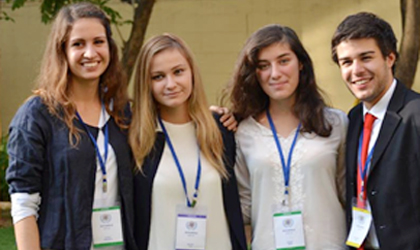
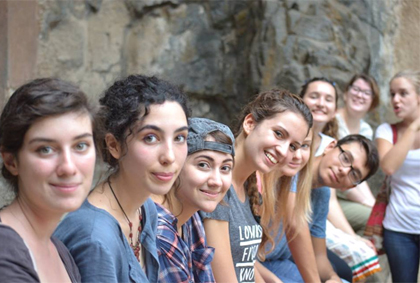
DAIMUN is known to be not only a conference where students debate and proffer solutions to pressing world issues, but also a melange of culture and nationalities with delegates from far and wide. This year, we were lucky to have 17 students from the Liceo Farnesina school in Rome, not merely participating in DAIMUN XI, but also giving their host students insights into the rich culture of Italy while getting to experience Indian culture and ways of life themselves.
Hosting a delegation from Rome was both an enriching educational experience as well as a fun way to make friends beyond borders. Since all of us, both hosts as well as guests, were involved in the MUN, our schedules were hectic to say the least. Yet, we wanted to ensure that our Italian friends would get the ‘full Indian experience’ regardless of time constraints.
We also did our best to help them experience our culture as best as possible. We let them live the joy and terror of an auto ride, went shopping for traditional sarees and kurtas, showed them around Bombay and described the nitty-gritties of the Indian way of life. We also helped them to pick out souvenirs for their friends and family back home. They were open to everything and at times, were more enthusiastic to learn about our customs and traditions than we ourselves have ever been. In return, our guests enlightened us about Italian culture, and we found great pleasure in discovering how similar Indian and Italian cultures are to one another, especially in our conceptions of the family unit.
The icing on the cake was undoubtedly our opportunity to spend one of our most important festivals with them: Diwali. One of the hosts very kindly agreed to organize a Diwali party, replete with Diwali sweets, lamps, firecrackers, mehendi and a puja. As we explained the story of Diwali and explained to them the significance of the lamps and the rangoli, the amazement and fascination they felt was perceptible, and honestly, we too began to appreciate the depth and diapason of our culture and traditions even more.
Our goodbye was a teary one; we had hosted them for a mere five days, but over the course of those five days, we knew that we had made friends for life. Their zeal to explore every nook and cranny of our cultural lattice, their accommodating nature and enthusiasm and the alacrity with which they approached a foreign country and a new lifestyle amazed and inspired us. We all hope to be able to keep in touch with them long after they return to Rome.
Photo Gallery